

Oil and gas operations place electrical equipment in environments where extreme temperatures, moisture, chemical exposure, and vibration can affect component performance. Cable assemblies must maintain reliable power and signal connections despite these conditions. Equipment used for drilling, processing, monitoring, and other operations depends on cables that can withstand the demands of the site. This makes cable construction, material selection, and connection protection important considerations for oil and gas applications.
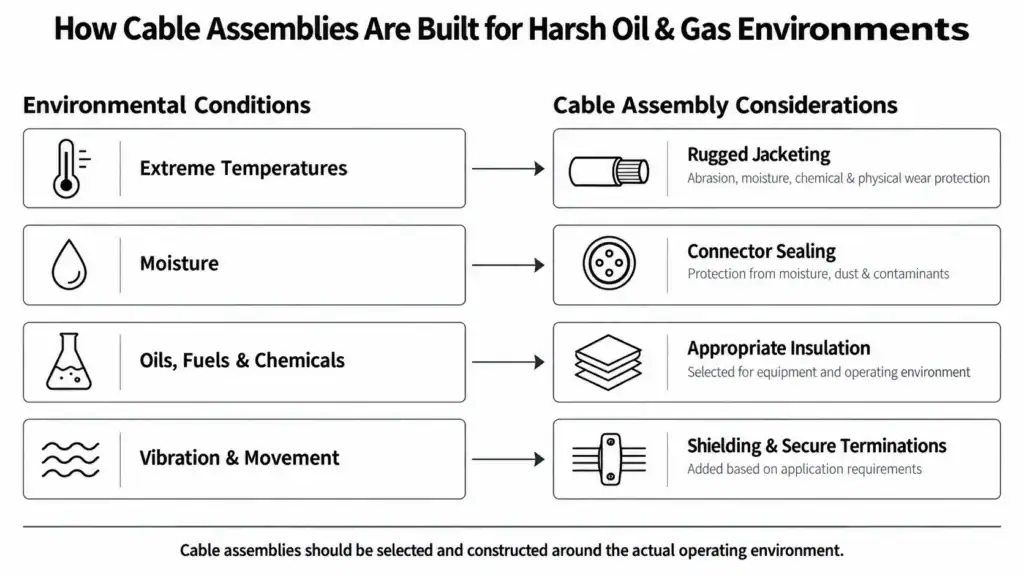
The Harsh Conditions Oil and Gas Cable Assemblies Must Withstand
Oil and gas sites can expose cable assemblies to several environmental stressors at the same time. Extreme temperatures can affect cable flexibility and material performance, while moisture can reach exposed components and connection points. Contact with oils, fuels, and other chemicals can also place demands on cable jacketing and insulation.
Vibration creates another challenge, particularly around drilling equipment, pumps, compressors, and other machinery with moving components. Repeated vibration and movement can place stress on cables and their connections over time.
For these conditions, industrial cable assemblies need to be selected and constructed around the actual environment in which they will operate.
Materials and Construction for Reliable Performance
Cable protection starts with the materials used throughout the assembly. Rugged jacketing can help protect conductors from abrasion, moisture, chemicals, and physical wear. The right jacket material depends on factors such as temperature range, chemical exposure, flexibility requirements, and installation conditions.
Connector sealing also deserves attention. Connection points can be vulnerable to moisture, dust, and other contaminants, particularly in outdoor or exposed installations. Proper sealing can help protect these points and support more dependable electrical connections.
Cable assemblies can also incorporate shielding, appropriate insulation, secure terminations, and other protective features based on the equipment and operating environment.
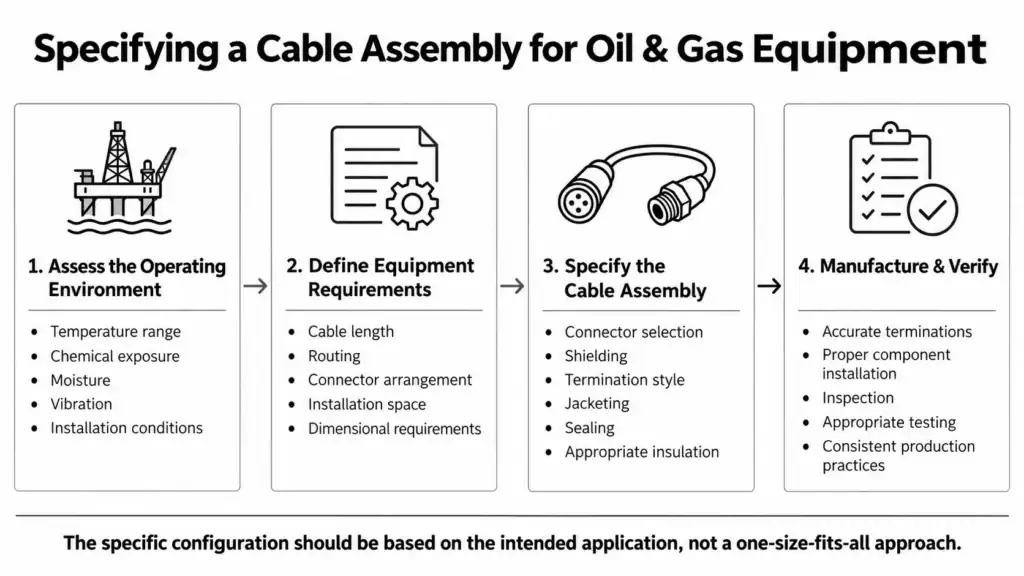
Custom Cable Assemblies for Specialized Oil and Gas Equipment
Oil and gas equipment often has specific routing, connection, and dimensional requirements. A standard cable may not provide the correct length, connector arrangement, jacket construction, or termination for a particular installation.
Custom cable assemblies allow these factors to be specified around the equipment. Cable length, connector selection, shielding, termination style, jacketing, and sealing can be addressed as part of the assembly. This is particularly useful for specialized machinery and equipment where installation space or environmental exposure creates additional requirements.
Where Cable Assemblies Are Used Across Oil and Gas Operations
Industrial cable assemblies can support electrical and electronic systems throughout oil and gas operations. Applications may include drilling systems, monitoring equipment, control panels, instrumentation, pumps, compressors, processing machinery, and other industrial equipment.
Each application can present different environmental demands. Outdoor equipment may require greater protection from moisture, while equipment operating near heat sources may require materials suited to elevated temperatures. Machinery exposed to oils, chemicals, or continuous vibration may require additional consideration for jacketing, insulation, and connector protection.
What Oil and Gas Can Learn From Defense-Grade Cable Assembly Requirements
Military applications provide another example of equipment operating under demanding environmental conditions. Military cable assemblies often require careful attention to material selection, secure terminations, physical protection, and environmental resistance.
The same basic considerations can apply to oil and gas equipment. Selecting appropriate materials, protecting connection points, and accounting for mechanical stress can help cable assemblies perform more reliably in demanding industrial environments. The specific requirements, however, should always be based on the intended application rather than assuming one configuration fits every environment.
Quality, Testing, and Manufacturing Considerations
Cable assembly reliability also depends on consistent manufacturing and quality control. Accurate terminations, proper component installation, inspection, and appropriate testing can help identify potential issues before assemblies are placed into service.
For oil and gas equipment, these steps are especially valuable when cable assemblies form part of systems operating continuously or in difficult-to-access locations. Consistent production practices also help maintain repeatability across prototype and production assemblies.
Build Cable Assemblies for the Environment
Oil and gas applications demand industrial cable assemblies prepared for extreme temperatures, moisture, chemical exposure, and vibration. Rugged jacketing and connector sealing can provide added protection where environmental exposure is a concern.
Carr Manufacturing Company brings experience supporting demanding industrial applications with custom cable assembly solutions. Visit Carr Manufacturing’s Oil and Gas industry page to learn more about its capabilities, or contact the company to discuss your application requirements.